

Key takeaways
- Capsules win on convenience and dosing accuracy because each one holds a pre-measured dose, while powder lets you adjust the amount gram by gram.
- Powder usually costs less per gram but needs a scale or scoop, and it carries a strong earthy taste that capsules hide completely.
- In 2026 the powder segment held 37% of the functional mushroom market while dietary supplements such as capsules held 52% (Precedence Research, 2026).
- Clinical trials on lion's mane used daily doses from 1,000 mg to 3,200 mg, so your target dose should guide how many capsules or scoops you take (Frontiers in Nutrition, 2025).
- Capsules suit busy professionals and travelers; powder suits people who blend drinks and want to fine-tune their dose.
Choose capsules if you want a fixed dose you can take in seconds, and choose powder if you want to adjust the amount and mix it into drinks. Both deliver the same mushroom, so the decision comes down to how you live and how much measuring you are willing to do. This guide compares lion's mane capsules vs powder on the four things that actually change your experience: convenience, taste and absorption, cost per serving, and which format fits your day.
Lion's mane sits inside a fast-growing category. In 2026 the functional mushroom market reached USD 37.86 billion and is projected to hit USD 84.78 billion by 2035, a compound annual growth rate of 9.37% (Precedence Research, 2026). More choice means more formats on the shelf, which is exactly why this comparison matters.
How Do Capsules and Powder Compare on Convenience and Dosing?
Capsules are the clear winner for convenience and dosing accuracy. Each capsule holds a pre-measured amount, so you swallow a known dose without a scale, a scoop, or any cleanup. Powder gives you flexibility to raise or lower the dose, but every serving asks you to measure.
That flexibility matters because effective doses vary. A 2025 systematic review found human trials used daily amounts ranging from 1,000 mg to 3,200 mg, across study lengths of 4 to 49 weeks (Frontiers in Nutrition, 2025). With powder you can dial in a specific target, but you need a small kitchen scale to do it well. Eyeballing a scoop introduces error, and that error compounds over weeks.
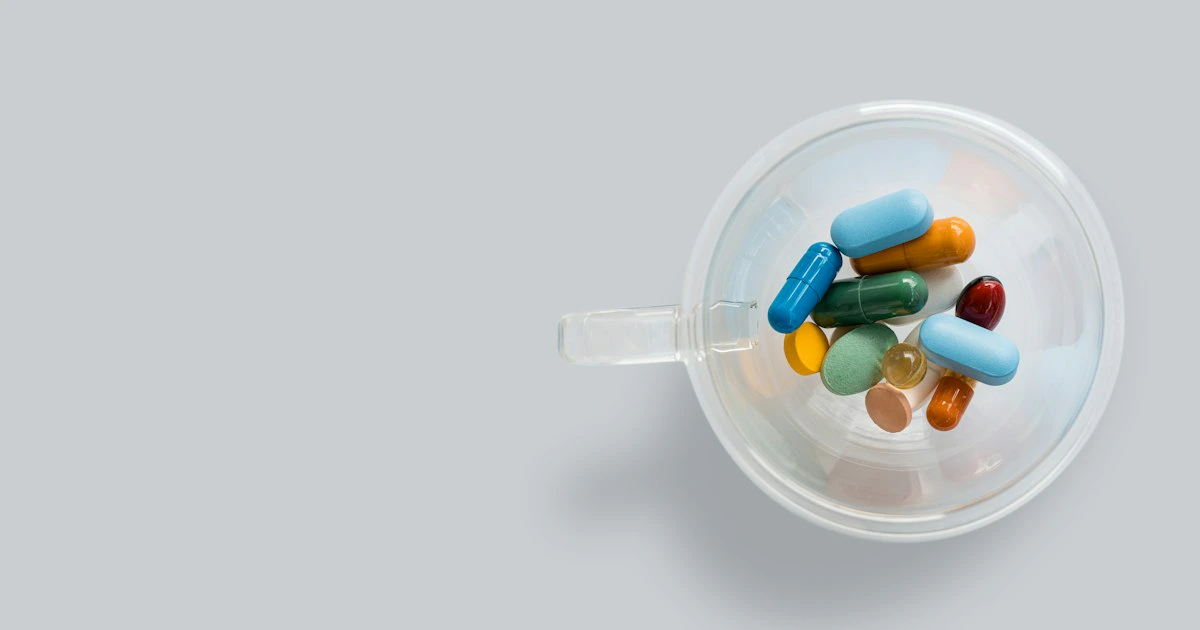
Capsules remove the guesswork. If you have ever forgotten whether you already dosed that morning, a blister of capsules or a daily pill organizer answers the question instantly.
Which Format Wins on Taste, Absorption, and Shelf Life?
Powder exposes the taste; capsules hide it. Lion's mane has an earthy, slightly bitter flavor that some people enjoy stirred into coffee and others find off-putting. A capsule seals that flavor inside a tasteless shell, so if taste is a dealbreaker, capsules solve it.
On absorption, the honest answer is that strong head-to-head human data is thin. The capsule shell dissolves quickly once it reaches your stomach, releasing the same compounds the powder would. For most people the practical difference is small, which is why daily consistency matters more than format. The best format is the one you will take every day without skipping.
There is one real variable worth knowing. Lion's mane products come as either whole fruiting-body powder or an extract, and extracts concentrate the active compounds. Both capsules and loose powder can be made from either, so the label matters more than the shape. Read whether the product lists a fruiting-body extract and what ratio it uses, then compare that across the two formats rather than assuming one shape is inherently stronger.
Taste also shapes how long you stick with a product. A format you dread becomes a format you skip. If you have tried powder and winced at the flavor, moving to capsules can be the difference between a two-week experiment and a daily habit. If you genuinely enjoy an earthy mushroom note in your coffee, powder turns the dose into part of a ritual you already look forward to.
Shelf life favors sealed, single-dose formats in practice. An opened bag of powder is exposed to air and humidity every time you scoop, while capsules stay individually protected until you open one. If you buy in bulk or live somewhere humid, that protection is a real advantage.
What About Cost Per Serving?
Powder usually costs less per gram, but the gap is smaller than it looks once you account for your time. Powder skips the capsule shell and the encapsulation step, so brands can price it lower. If you buy a large bag and measure carefully, powder is the budget pick.
Capsules add a modest premium for the shell and the convenience. What you pay for is pre-measured accuracy and zero prep. Online channels now account for 41% of functional mushroom sales, which has pushed prices down and made it easy to compare cost per serving across brands before you buy (Precedence Research, 2026).
To compare fairly, read the milligrams per serving on both labels. A cheap powder with a tiny serving size can cost more per effective dose than a well-priced capsule. Match the number against your target dose before judging which format is the better value.
There is also a hidden cost in waste. With powder, spilled scoops, clumping in humid weather, and inconsistent measuring all chip away at the bag before you finish it. Capsules have almost no waste because every unit is sealed and counted. If you tend to lose track of loose supplements, the lower sticker price of powder can quietly even out over a few months.
Which Format Suits Different Lifestyles?
Match the format to your daily habits. If your mornings are rushed, you commute, or you travel often, capsules fit cleanly into a bag or a pocket and need no water beyond what you use to swallow them. There is nothing to spill and nothing to clean.
Powder fits a different rhythm. If you already make coffee, tea, or a smoothie every morning, stirring in a scoop adds almost no effort and lets you fold the dose into a habit you keep anyway. People who like to experiment with their dose, or who want to split it across two drinks, lean toward powder for that control. The market reflects this split: in 2026 the powder segment held 37% of the functional mushroom market, while dietary supplements such as capsules held 52% (Precedence Research, 2026).
Students and desk workers often prefer capsules for a simple reason: one less decision in the morning. Powder rewards people who enjoy the ritual of preparing a drink and do not mind the taste.
Think about where you take your dose, too. Capsules travel well through airport security, fit in a weekly pill organizer, and survive a backpack without leaking. Powder is harder to carry and easy to spill, but it shines at home where you have a scale, a jar, and a blender within reach. If your routine moves between home, office, and travel, capsules give you one consistent dose everywhere. If you take your supplement at the same kitchen counter every day, powder loses most of its downsides.
Household habits matter as well. Powder lets two people share one bag at different doses, which can lower the cost for a couple or a family. Capsules make more sense when only one person is dosing and wants grab-and-go simplicity.
Why Do Many People Prefer Capsules for Daily Use?
Daily consistency is where capsules shine. The supplement that works is the one you actually take, and capsules lower every barrier to taking it: no measuring, no taste, no cleanup, no kitchen required. That reliability is why many people building a long-term habit settle on capsules.
Omnitropics makes lion's mane in capsule form for exactly this reason, so you get a pre-measured dose that slots into your morning without any prep. If you want the control of powder, you can still open a capsule and stir the contents into a drink, which gives you a middle path. Ready to start a routine? Our morning routine for all-day mental clarity shows how to build lion's mane into the first hour of your day.
Pick the format that removes friction from your routine. If you want speed and certainty, start with capsules and take them at the same time each day for a few weeks before judging the results.
Frequently asked questions
Is lion's mane powder stronger than capsules?
Strength depends on the extract and the dose, not the format. A capsule and a scoop of the same extract deliver the same compounds. Check the milligrams per serving on each label rather than assuming powder is more potent.
Which is cheaper, lion's mane capsules or powder?
Powder is usually cheaper per gram because it skips the capsule shell and encapsulation step. Capsules cost a little more but save you the time and guesswork of measuring, which many daily users find worth the small premium.
Can I open lion's mane capsules and mix the contents into a drink?
Yes. Most lion's mane capsules use a gelatin or vegetarian shell you can pull apart, then stir the contents into coffee or a smoothie. If you plan to do this often, buying powder directly is simpler and cheaper.
Do capsules absorb as well as powder?
Human absorption data comparing the two formats is limited, and the capsule shell dissolves quickly in the stomach. For most people the practical difference is small, so choose the format you will actually take every day.
How many lion's mane capsules equal a scoop of powder?
It varies by brand. Compare the milligrams per serving on both labels. If capsules are 500 mg each and a powder scoop is 1,000 mg, two capsules match one scoop of the same extract.